If the user is using Spotter from the multiple networks, then the DNS name must be used instead of the static IP address on the VMS server side.
Editing host file
-
Check your Windows computer name.
-
Browse C:\Windows\System32\drivers\etc
-
Open host file with Notepad
-
You may need to run Notepad with Administrator user rights
-
Add the new line to the end of the host file with the following format: Internal IP address and Windows Computer name.
-
For example, an internal IP address is 10.99.100.110, and the PC name is DR-main-server.
-
Save changes.
Hosts-file example
# Copyright (c) 1993-2009 Microsoft Corp.
#
# This is a sample HOSTS file used by Microsoft TCP/IP for Windows.
#
# This file contains the mappings of IP addresses to hostnames. Each
# entry should be kept on an individual line. The IP address should
# be placed in the first column followed by the corresponding hostname.
# The IP address and the hostname should be separated by at least one
# space.
#
# Additionally, comments (such as these) may be inserted on individual
# lines or following the machine name denoted by a '#' symbol.
#
# For example:
#
# 102.54.94.97 rhino.acme.com # source server
# 38.25.63.10 x.acme.com # x client host
# localhost name resolution is handled within DNS itself.
# 127.0.0.1 localhost
109.108.11.16 DR-main-server
Actions in the System Manager
-
Go to the System tab in the System Manager
-
Click Change VMS server addresses
-
Select the VMS server from the list
-
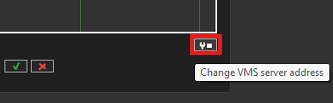
Click Change VMS server address
-
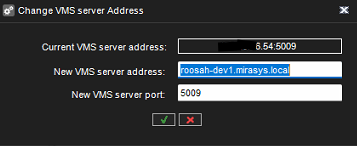
Enter the VMS server computer name(DNS name) to the New VMS server address field
-
Click OK
Actions in the Spotter side
-
Browse C:\Windows\System32\drivers\etc
-
Open host file with Notepad
-
You may need to run Notepad with Administrator user rights
-
Add the new line to the end of the host file with the following format: Internal IP address and Windows Computer name.
-
For example, an internal IP address is 10.99.100.110, and the PC name is DR-main-server.
-
Save changes
-
On each Mirasys Spotter site, the customer must change the main server recorded address to a computer name(main server computer name ) instead of a static IP address
Hosts-file example
# Copyright (c) 1993-2009 Microsoft Corp.
#
# This is a sample HOSTS file used by Microsoft TCP/IP for Windows.
#
# This file contains the mappings of IP addresses to hostnames. Each
# entry should be kept on an individual line. The IP address should
# be placed in the first column followed by the corresponding hostname.
# The IP address and the hostname should be separated by at least one
# space.
#
# Additionally, comments (such as these) may be inserted on individual
# lines or following the machine name denoted by a '#' symbol.
#
# For example:
#
# 102.54.94.97 rhino.acme.com # source server
# 38.25.63.10 x.acme.com # x client host
# localhost name resolution is handled within DNS itself.
# 127.0.0.1 localhost
109.108.11.16 DR-main-server
Running Spotter as Administrator
When the Spotter starts with Run as administrator, the user can select different addresses and where to connect.
-
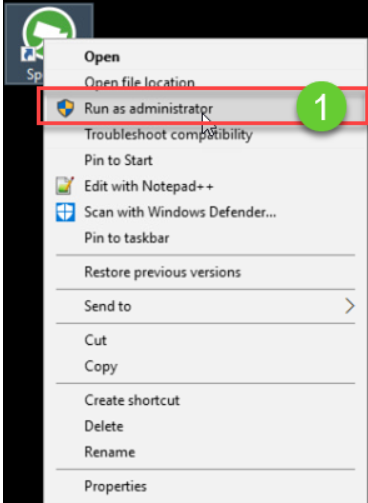
Right-click top of the Spotter icon and select Run as administrator
-
Hit the Delete button

-
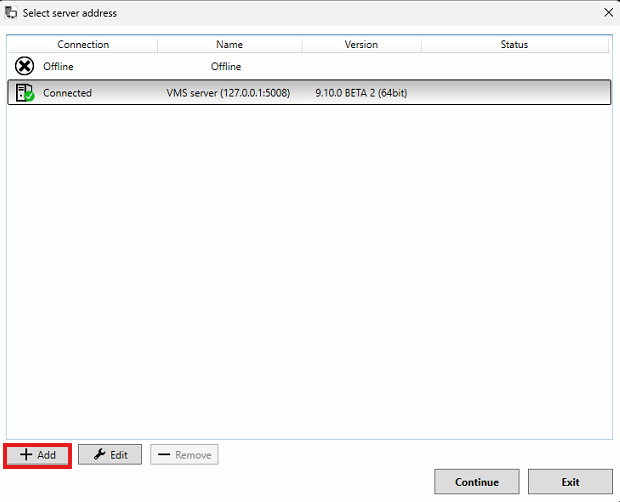
Click Add
-
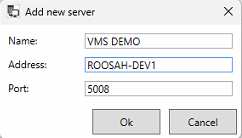
Set the name of the connection
-
Set the computer name of the VMS server PC to the Address field
-
Click Ok
-
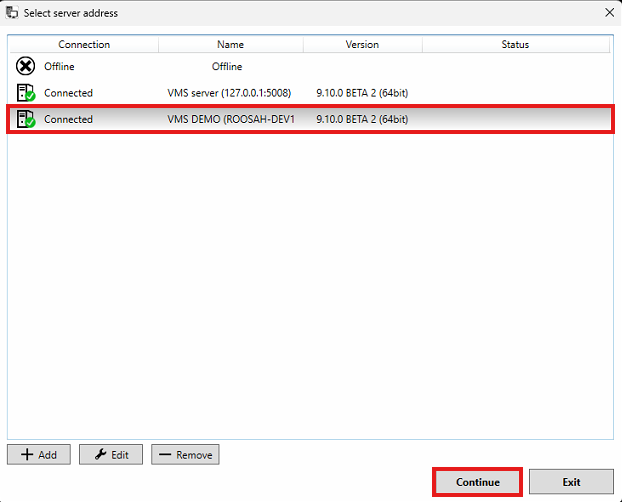
When connection between the Spotter and VMS server is okay, Connection status Connected is shown
-
Click Continue to create connection to the selected VMS server